Who gets to belong when Brazilian activists in Toyota turn Japan’s ideal of coexistence into a community of their own?
Abstract
From 1990, a revised immigration law offered foreigners of Japanese descent (nikkei) the right to work for unlimited duration in Japan. Many nikkei came from Latin America to take on blue-collar jobs in the country’s factories. Homi Danchi, a working-class housing complex in Toyota, Japan, has since become known for its Brazilian immigrant community. Drawing on in-depth interviews, this study analyzes the self-narrated biographies of three Brazilian immigrants who actively participate in community activism in Homi. Applying Pierre Bourdieu’s theory of practice and his critique of the “biographical illusion,” this article examines how the abstract ideology of Japanese-style multiculturalism (tabunka kyōsei) is understood and practiced at a local level. It argues that our narrators’ practical desires to recreate multicultural community in Homi reapply abstract multicultural values to a local context, thereby implicitly acknowledging multiculturalism’s symbolic capital and limiting the extent of activism to Homi. Applying the symbolic capital of multiculturalism to everyday practice, in turn, makes activism meaningful and imagines a community of fellow actors, albeit to the exclusion of outsiders. Multiculturalism thereby becomes a question not primarily of coexistence, but of community-building. We also underline the role that narration of one’s own history plays in mediating between individual experience and community belonging, contributing to methodological debates about Bourdieu’s biographical method.
Keywords
- Bourdieu
- multiculturalism
- local identity
- activism
- immigration
- nikkei
Full text
Scott Ma and Mariana Alonso Ishihara, “Multiculturalism between Ideology and Practice: Immigrant Self-Narrations of Community Activism in Toyota, Japan,” Contemporary Japan 37, no. 1 (2025): 88–109, https://doi.org/10.1080/18692729.2023.2220467.
Introduction
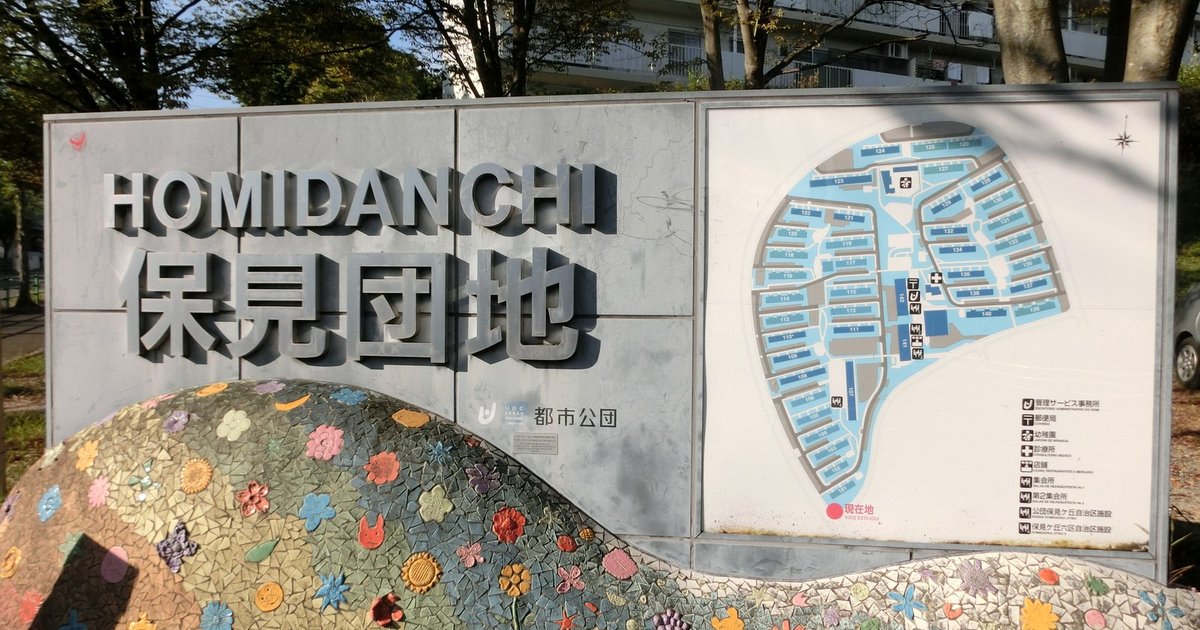
In his 2020 song HOMI, the Japanese-Brazilian rapper Playsson sings about his upbringing in Homi Danchi. Homi Danchi is a massive apartment complex (danchi in Japanese) consisting of 67 buildings and nearly 7,000 residents in Toyota, Aichi Prefecture, where a substantial population of Brazilian immigrants live (for previous work on Homi, see Ikeuchi 2019a; Linger 2001; Tanno 2013). It is among the oldest and most well-known return migrant communities in Japan today. The song’s refrain goes as follows:
Finally, we have left the danchi
The result of hardships until now
We can no longer stop, we can’t pay attention, to the haters over there
All of my pals have it, a criminal record
If we exit into the streets, immediate conflict
I can’t say anything, it’s the same for everyone
Well, there’s no choice, this is one’s upbringing in Homi Danchi
To become successful, there’s absolutely no option, other than this
If the choice is to lead a shitty life, then it would be better to die
To earn money, the choices are either music or cocaine (Playsson 2020)1
Just over three decades ago, in 1990, the Japanese government first introduced a visa category allowing foreigners of Japanese descent (nikkei) the right to live and work in Japan. Since then, a generation of immigrants hailing primarily from Latin America have grown up in Japan, often in working-class communities such as Homi. Playsson is a 1.5-generation immigrant, arriving in Japan from Brazil as an early teen in 2011. In his song, Playsson describes Homi as a dangerous, violent place from which he has struggled hard to leave. Though the lyrics are on the surface dismissive of Homi, Playsson frequently identifies himself through his attachment to the danchi, and often collaborates with other artists connected to the neighborhood (Meccha yabai yan 2020). Indeed, as violent as Homi may be, within the danchi, Playsson’s lyrics emphasize that life is “the same for everyone”; and if all of Playsson’s pals have a criminal record, the collective struggle to get out of Homi also seems to create a positive sense of community. Playsson is not the only nikkei immigrant to begin a rap career in Japan, nor is he unique in his attachment to the danchi where he grew up (Isobe 2022). We find, in fact, the same triangulation between the struggle for equality, attachment to one’s community, and the articulation of one’s life story in the discourses of the three immigrant activists whose narrations we share in this paper. Why and how, this paper asks, does place matter in the pursuit of social justice? How are personal goals reconciled with community ones, and community ones with abstract, ideological discourses? How does multiculturalism operate at the micro level, and what can this tell us about the shortcomings of social activism?
Multiculturalism, between national ideology and local practice
Our paper contributes to the substantial literature on multiculturalism in Japan, known as tabunka kyōsei. This Japanese-style multiculturalism can be translated literally as “multi-cultural coexistence” and has been criticized as ineffective and discriminatory. Compared to multicultural institutions in the United States, multicultural institutions in Japan exist more at the local than at the national level. Though a 2006 Ministry of Internal Affairs and Communications (MIC) report is often referred to as representative of a national stance on multiculturalism (Aiden 2011; Nagy 2012), the concept was first elaborated at the turn of the twenty-first century by municipal governments dealing with increasingly diverse demographics. Municipal and prefectural governments in Japan continue to have significant influence on how multiculturalism is executed (Demelius 2020; Flowers 2012; Kim and Streich 2020).
The notion of living together with other cultures, furthermore, discursively excludes non-Japanese cultures. It treats the non-Japanese as an Other who may be allowed to live in Japan, but never to join the Japanese community (Iwabuchi 2016; Liu-Farrer 2020). This explicitly racial nature (which is itself arbitrarily constructed) raises doubts about whether multicultural coexistence can be considered to be genuine multiculturalism. Indeed, support for multiculturalism is not exclusive from support for an ethno-national identity (Nagayoshi 2011), nor is it reflected in “discourse, policy, or people” (Burgess 2012). Multiculturalism is seen by some local authorities as a problem that foreigners, not Japanese, should be concerned about (Demelius 2020), and immigrants of foreign origins are encouraged to celebrate their foreign roots rather than seek to be incorporated into the Japanese community (Seiger 2018). Kibe (2014) points out that in Japanese multiculturalism, foreigners have the right to obtain community citizenship, but never national citizenship. That giving foreigners national citizenship is not even debated in national policy suggests that despite all the rhetoric of foreigners being part of our community, there is one community from which they are excluded a priori, which is that of the nation-state.
A central problem in critiques of Japanese multiculturalism therefore consists of reconciling its doubled nature as national ideology and local practice. If the execution of Japanese-style multiculturalism takes place at the local level, can we really speak of a single ideology that envelops the entire nation-state? How do people living in local contexts reconcile the realities they experience within their everyday lives and the often abstract and generalizing discourses on multiculturalism spoken of by government leaders and Japanese-language media? Our study supports the finding that the lack of clarity when multiculturalism is elaborated as a national ideology gives local actors space to maneuver. As Demelius (2020) and Ishiwata (2011) show, multiculturalism has become a catchphrase for policy and activism aimed at dealing with a broad range of social problems caused by immigration and globalization. In her study of volunteer-led Japanese language classes in Aichi Prefecture, Nakamatsu (2013) finds volunteers critical of and ambivalent towards multiculturalism and their ability to improve the lives of immigrants. From a different perspective, in her study on community-building in the rural Kiso Valley, Faier (2009) argues that dreams of urban cosmopolitanism motivate Japanese actors’ perceptions of foreignness and how foreigners should be treated. In our work, we find a similar overlap between multiculturalism and community activism. Activists recreate multiculturalist discourses perpetuated by the state within their local community in a way that simultaneously reifies and criticizes the former as being both a desirable ideal and unachievable on a national scale.
Theory and method: Bourdieu, practice, and critical biography
In this paper, we use Pierre Bourdieu’s theory of practice to analyze in-depth interviews with three Brazilian immigrants active in promoting multiculturalism in Homi Danchi. Bourdieu’s theory is useful because it extends beyond the framework of tabunka kyōsei often used to explain such activities. Activists have diverse goals that go beyond those officially stated by authorities, and they do not always explain their practices in terms of the symbolic ideology that frequently frames it. At the level of local, everyday practice, multiculturalism is an analytical framework with limited utility, laden as it is with implicit references to national ideology from which activists may feel distant. As a theory explaining how everyday life may unconsciously support abstract, discriminatory ideologies, Bourdieusian practice acknowledges how narrators push to move beyond multiculturalism while remaining embedded within its ideological and institutional baggage. It also underlines the primacy of multiculturalism-as-practice, for which ideology frequently serves as a rationalization and afterthought.
In his theoretical writings, Bourdieu contrasts the everyday decision-making of practice with the pure rational judgment of academic scholarship (Bourdieu 1977, 1990). Bourdieu summarizes his theory of practice with the equation ”[(habitus) (capital)] + field = practice” (Bourdieu 1984, 101). Bourdieu calls “habitus” the set of embodied practices, developed through one’s upbringing, that we take for granted. This habitus is produced by and contains various forms of capital, principally economic, cultural, and social. The symbolic capital of language, additionally, codifies the field of power and allows for distinctions between actors. The “field,” in turn, is the social context where contestation between forms of capital takes place, and which determines in part each form of capital’s value. Practice may or may not alter the authority of the field or its system of symbolic capital, but it always requires the actor’s judgment that the action corresponds to his or her goal.
In this article, we draw on the work of a particular subset of social scientists, principally in sociology, who use Bourdieu as a basis for building a critical methodology for biography-writing (Barrett 2015; Ikin, Johns, and Hayes 2012; Kolkenbrock 2017). This method builds on a short essay by Bourdieu, first published in 1986, titled “The Biographical Illusion” (Bourdieu 2017), where the sociologist criticizes biography as forming the illusion of a proper name, decontextualizing this subject from the development of the multiple social fields in which he or she operates. An individual’s life is no logical chain of events, but a series of negotiations within different fields. One response to Bourdieu’s critique has been the “sociological biography,” which traces the psychological development of a biographical subject through his or her growth in different familial and social contexts (Atkinson 2022; Lahire 2019). Other writers inspired by Bourdieu argue for a “socio-analysis” or an “autoethnography” through which speakers account for the unconscious and social motivations behind the stories they cite (Frangie 2009; Reed-Danahay 2017). We build on this latter tradition of biography as socio-analysis by focusing on how our narrators use self-narration as a tool to explain their practical decisions, showing how past-narration connects between abstract ideology and concrete practice, as well as local community and abstract outsider. The narration of one’s own history grounds the practical decisions that people make precisely through its presence as an illusion. Biography and self-narration become a joining point that unites the particular subjectivities of individual activists, the broader ideological discourse of multiculturalism, and the practical decisions that each narrator makes to fulfill their goals.
Data and outline
We draw our data primarily from extended interviews with three nikkei Brazilian community activists in Homi Danchi held over the period of seven months beginning in February 2021. We conducted interviews in Japanese, Portuguese, and English, depending on the speaker’s preferred language. Our interview with Ricardo was principally in Japanese; with Marcelo, Portuguese; and with Michelle, English. During this period, we also occasionally participated multicultural activities organized by a non-profit organization operating in the danchi. We also conversed informally with leaders and volunteers in the NPO as well as the danchi’s neighborhood associations (NHA).
When collecting interviews, we followed ethical guidelines set by the British Oral History Society. Before interviews, we prepared a project information sheet that detailed who we were, the purpose of our research, and the use and storage of data that interview participants signed. We also made clear to interviewees that they could refuse participation at any time during or after the interview, upon which we would not use any data concerning them for our project. In this article, we have anonymized all personal names, including those of our interview participants, as well as that of the NPO for which our third narrator works.2
Our sample cannot represent the larger Brazilian community. As community activists, our three narrators have a relatively high degree of fluency in Japanese. Their status as either retirees or employees, furthermore, lets them commit more time to activism than most immigrants would be able to. A focus on the unique lives of individuals, however, tells us about how their particular gendered, generational, economic, and personal situations influence their individual decisions on how to participate in community formation. A micro-level focus furthermore lets us capture the nuanced connection between individual experience and multicultural ideology that each activist working under the multicultural banner must work through. Our three narrators dedicate themselves to community-building projects in Homi through a variety of organizations, most notably neighborhood associations and non-government organizations. They engage in a practice of community building, negotiating their actions to achieve this goal in an ideologically saturated field that often marginalizes them economically, culturally, and socially.
The remainder of our paper consists of five sections. First, we give a historical overview of Brazilian return migration to Japan in conjunction with multicultural policy in Homi Danchi. Then, we introduce our three narrators. We begin with Marcelo and Ricardo, who immigrated to Japan around the first wave of migration in 1990 and have lived in Homi Danchi since. Now in retirement, they involve themselves in two of Homi’s NHAs, where they serve as vice-presidents. Then there is Michelle, a second-generation immigrant who spent some years growing up in Homi, and now works in the danchi for NPO Ajudar, whose primary concern is Japanese-language education for non-native speakers. Within the three narrative sections, we show how the dream of creating a multicultural community in Homi mediates between our narrators’ diverse lived experiences and their commitment to a multicultural ideology and its institutions. Our conclusion summarizes the preceding discussion and advances our theoretical elaboration of Bourdieu’s notions of practice and biography.
Brazilian return migration and local multiculturalism in Toyota
A significant body of the existing literature on the Brazilian return migrants to Japan revolves around the question of ethnic identity. The notion of nikkei, or being of Japanese ancestry, is a visa category only sometimes used by those concerned to define themselves (Ishida 2009). It derives from the 1990 Immigration Act, which allowed Japanese descendants up to the third generation to apply for long-term visas without restrictions on employment (Takenaka 2020). With ballooning unemployment in Brazil and a labor shortage in Japan, the economic motivations were apt for a wave of “return” migration that grew during the 1990s (Sasaki 2013, 32). If the Japanese were “japonês” under the ideology of Brazilian racial democracy (Adachi 2004), when in Japan, they became socially and economic excluded through their relative inability in Japanese and their placement in undesirable, lower-class jobs (Kajita, Kiyoto, and Naoto 2005; Kawamura 1999; Roth 2002). This uncomfortable in-between leads to nostalgia for a lost home (Ishi 2003; Lesser 2003) that at times betrays dreams of glorious transnational lives (Linger 2001). The awkward recognition occurs on both sides of the Japanese-Brazilian divide and raises uncomfortable questions about ethnic and national identity (Tsuda 2003).
More recent work on the return diaspora has sought to nuance the priority given to race and nationality in earlier writing. To “live transnationally” means living at the intersection between race and multiple other contexts such as generation, class, and gender. At the same time, it means searching for a home to belong to in spite of this exclusion (Nishida 2017; von Baeyer 2019). Pentecostalism, and in particular the religion’s ability to reconfigure brutal labor practices into an ethics of entrepreneurialism, may serve as another resolution to the alienation of migration and blue-collar labor (Ikeuchi 2019b). To this conversation, we add the site of material place as another home to which immigrants may claim belonging, present but subdued in the existing anthropological and sociological literature on transnationalism and identity. Our paper adds to this conversation by considering Brazilians not only as transnational actors, but also as local ones. Excluded from a national community, immigrants may identify with their local communities over a national one (Han 2014). Indeed, in Homi Danchi, creating a local identity is the condition for discovering a global one. By participating in activism at the site of Homi, activists can transcend racial, class, and other differences by imagining the multicultural concretely and at home.
This discourse of multiculturalism as a form of local belonging originates from municipal planning by the city of Toyota and has been only later applied to Homi. For the past two decades, official documents published by the city of Toyota have framed its support for resident foreigners within a larger program of “internationalization” (kokusaika). An early planning document from 2001 notes that up until then, internationalization principally targeted advanced countries through programs such as improving sister city relationships, teaching English, and exchanging artworks. Existing city facilities that targeted internationalization directed to wealthy countries were unprepared for nikkei immigration after the 1990 entry law revisions. The 2001 plan is optimistic, arguing for a “long-term vision” that plans for a multicultural community where residents of all nationalities can live together (Toyota-shi 2001, 3–4). Three years later, in 2004, the city signed the Toyota Declaration, which criticized the national government for preserving an immigration regime intended for short-term labor that ignored the permanent settlement happening on the ground. Local authorities would therefore aim towards a “true society of coexistence” that would concern themselves for foreigners’ education and employment while mobilizing in favor of immigration reform (GST 2004).
Official planning documents published by Toyota City in the early 2010s inherit this long-term vision of a future Toyota with multinational inhabitants living together in peace. They identify the imagined internationalized Toyota as “an international exchange city overflowing with charm” and a “safe, at ease multicultural city.” The planning division proposes a number of projects to this end, including improving facilities for business travelers and tourists, giving local children more opportunities to go abroad, and international exchanges with Toyota’s sister cities. Within this larger framework of internationalization is placed the project of supporting the long-term settlement of immigrants through Japanese language education, mutual understanding, and other means (TK 2013; TSK 2011, 8). Resolving the linguistic, social, and economic difficulties that immigrants face therefore contributes to the more general invention of Toyota as a site where cultures congregate amicably and creatively. Within political discourse, this framing of immigrant aid as a problem of urban planning continues up to this day (TK 2022).
This discourse guides the labor of aid organizations as well. Toyota City entrusts many of its international activities to non-governmental bodies, most notably the Toyota International Association (Toyota Kokusai Kōryū Kyōkai, TIA), founded in 1988 with a mission to promote the city’s internationalization. The TIA has been important in addressing social problems Brazilians faced, even embarking on a study tour to Brazil in 2002. Local demographics and preeminent issues mean much aid is directed toward Brazilian immigrants, however, the TIA’s broader mandate does not target Brazilians or even immigrants, but the development of Toyota City into an international metropolis (TIA 1999, 91). Though the TIA’s mandate is globalist, it is also local, in that the participants in its activities are residents who want to create a cosmopolitan community in the concrete site of Toyota. Up to today, the TIA organizes a broad variety of culturally themed activities toward this end including community festivals, educational workshops, and courses in both Japanese and non-Japanese languages.
More recently, this city-planning discourse has shifted from the city of Toyota to the even more local area of Homi, and it is activism at Homi to which our narrators are most attuned. Since 2019, the immigrant-support NPO Torcida spearheaded the Homi Art Project, where community members together turned a wall into a painted mural, expressing their collective belonging through art (HAP 2020). Simultaneously and collaboratively, Chukyo University professor Saitō Hisafumi began the Homi Project in 2020, which cooperates with local actors to transform Homi into a pleasurable place to live (Saitō 2021). The practical goals of both projects are similar: to make the danchi more livable and transform it into a site of congregation for all nations, an echo of the internationalization of Toyota. Like Toyota’s multiculturalism, the multiculturalism of Homi is a distinctly local one in which local and cosmopolitan identities are overlaid and national politics spurned. Activism not only resolves problems, but also overcomes racial and other differences and formulates an identity to which residents can belong.
Ricardo: Community activism without multiculturalism
Ricardo was born in 1956 in São José dos Campos, São Paulo, Brazil. Just recently passing the age of 65, he has now retired after a little more than 30 years working for subcontractors of Toyota, a period during which he lived with his family in Homi. Before he came to Japan, Ricardo was laid off from his work at an aircraft manufacturer in Brazil, but he was fortunate enough to be scouted by a Japanese company seeking Brazilian workers to fill their labor deficit. Unlike most Brazilian immigrants who arrived with and after him, Ricardo arrived not as a fixed-period contract laborer or as a dispatch worker, but as a regular, full-time employee. He therefore worked alongside mainly Japanese colleagues and earned more than dispatch workers. Ricardo also spoke Japanese relatively fluently before coming to Japan, aiding his professional advancement. Ricardo’s first job when arriving in Japan was to inspect goods produced in a factory operated by one of Toyota’s secondary subcontractors (shitauke), Kojima Press. Five or six years into his job, his skill in interpersonal communications as well as his bilingual fluency attracted the attention of both his company’s contractors and his company’s own subcontractors. Ricardo was thus promoted from being inspector of his own company’s products to an inspector of the production processes of his company’s subcontractors. He tells us that in part because of his unique skillset and name recognition, even the superiors in his own company gave him a significant amount of autonomy.
Ricardo does not speak of his own life as linearly as the chronological biography above suggests. When speaking, Ricardo interweaves personal, community, and national history to explain his current attitude towards his activism. Ricardo self-consciously acts to benefit the local community of Homi rather than Japan as a whole. He identifies his disillusionment with city-led multiculturalism not only within the context of his own engagement, but also within the broader context of his family and his community. When Ricardo speaks, these historical references weave freely into one another, such as in the following exchange:
RICARDO: I think that the city of Toyota has done much studying. The government officials working for the city. [. . .] To resolve the problems with the Brazilians, they went to Brazil, you know. The officials. And I told them to tell me where they are going.
RICARDO: That was already half a year earlier, and one week prior, they brought me [a report] and asked, “Ricardo, how about this?” And this, well, are you not embarrassed by this? To show me something like this. This is illegal. [. . .] Even if you guys go there, what sort of solution will that bring?
AUTHOR 1: For an entire half-year?
RICARDO: They went. Fifteen people!
AUTHOR 1: When did this happen?
RICARDO: Hmm . . . Ten years ago. That was when there were the most problems [in the danchi].
AUTHOR 1: That was just at the time of the Lehman Shock, right.
RICARDO: Yes, yes.
AUTHOR 1: I don’t recall hearing of a trip from that time. I imagine much had happened then.
RICARDO: During the Lehman Shock, many things happened. Everyone was rather cheated (damasareta). It was a huge sum of money, something like five million yen. Everyone was quite troubled.
RICARDO: You know, my father and my grandfather were also tricked by Japan. Just before the war, they thought they could easily go [to Brazil], earn money for two to three years, and live a good life in Japan. There was probably a gap between their understanding [and their reality]. I bet they suffered and suffered, so that we can still speak about it today. I doubt my father will say anything, I imagine he suffered quite a lot.
AUTHOR 2: That must have been difficult.
RICARDO: Well, things are like that. Everyone, the foreigners, they are broad-minded (kokoro ga hiroi). They can immediately become friends. [. . .] I can’t have this sort of conversation with Japanese. They immediately flee. They become afraid.
Ricardo distinguishes between the foreigners and the Japanese, identifying official multiculturalism, fiscal waste, and closed-mindedness with the latter. With foreigners, Ricardo associates victimhood and friendly community. Within a short span of the interview, he draws from three different historical examples as evidence. Ricardo first cites a study trip to Brazil led by members of the city council of Toyota. An immense waste of time and money in Ricardo’s eyes, the trip is for him symptomatic of the ineptitude of city-led multiculturalism. Ricardo then cites the fallout from the Lehman Shock, after which the Japanese government offered money to Brazilian immigrants who would return to their home country. The significance of the five million yen to which Ricardo refers is unclear, but his choice of such a large number underlines the extreme degree of the betrayal. Lastly, Ricardo connects the treachery of the Lehman Shock with his own family history as prewar Japanese immigrants to Brazil. This immigration, too, was a betrayal by the Japanese government, which fed Ricardo’s father and grandfather unrealized promises and caused them suffering. He concludes his discourse by returning to a distinction between the friendly community of foreigners in Homi and the lack of understanding by national and municipal governments.
Ricardo’s rejection of Toyota’s official multiculturalism goes hand-in-hand with a conviction that positive community life is possible, if not already existing, within Homi. This disenchantment with official multiculturalism, however, developed over the course of 30 years of active participation in community life. Ricardo tells us that when he first arrived in Japan, the NHAs and local authorities would pester him to mediate between the Japanese and the Brazilian residents in Homi because of his linguistic and cultural fluency. Ricardo became increasingly disillusioned over time, eventually telling those around him to stop referring his name to authorities. “Multicultural” activities, Ricardo tells us, were wastes of time where Japanese and Brazilians voiced complaints about each other before returning home, having accomplished nothing. He explains to us:
RICARDO: If I offer my name, they’ll come to me for complaints about literally anything . . . If there is a scratch on their car, if something happens to their underwear, or their wife’s underwear . . . I was exasperated! Even if you ask me for help on these matters, there’s nothing I can do.
Within the field of Homi, Ricardo’s cultural capital attracted attention differently than it would have in Brazil. Conversational fluency in Japanese meant that Brazilian and Japanese residents alike turned to Ricardo as a leader. Ricardo’s relative economic capital, furthermore, made it easier for Ricardo to find time to volunteer himself for such activities. And yet, though Ricardo feels that improving cross-cultural understanding in Homi is desirable, he also sees the symbolic rhetoric of “multiculturalism” as falling short of achieving its purported goals. As the above quote shows, Ricardo criticizes multiculturalism for treating problems that have nothing to do with culture as being cultural, and for preventing the resolution of solvable problems through the convenient excuse of cultural difference. This does not mean that Ricardo gave up on his dream for a cosmopolitan community in Homi; to the contrary, Ricardo redirects his social and cultural capital toward community-building projects that he believes will have a genuine effect, in contrast to the purely ideological character of official multiculturalism. As Ricardo tells us,
RICARDO: They wrote a lot of things in books and stuff [about multiculturalism], but in the end, no action (katsudõ) has been taken.
AUTHOR 2: It’s just written word, just propaganda.
RICARDO: In the end, they just want to show scenes in which we are forlorn.
AUTHOR 2: Scenes when you are struggling.
RICARDO: Like the image of the time when everyone lined up to take an international call. Even if you share this with people, what is the point? Let me tell you what I want them to do for us the most. What we, what foreigners are struggling the most with, what is it?
RICARDO: In the apartments, why is it that people are still having barbecues on their verandas? Because there’s no place to do it . . . Even without [making an effort to produce a public space], people complain.
Here, too, Ricardo uses community history to contrast the propaganda of official multiculturalism with the practical need to create public spaces. As the previous quote suggests, one point to which Ricardo repeatedly returned during our interviews was the issue of barbecues. The right to hold barbecues has been a repeated point of contention since the Brazilians began moving into Homi. If barbecues were spaces for social gatherings in Brazil, no equivalent tradition exists in Japan. It was understandable, then, for Japanese residents in Homi to be intimidated and hesitant towards having such noisy, smelly events around their homes. The NHAs’ refusals to set up public barbecue grounds, however, has not resulted in an end to barbecues, but rather a shift from public grounds to private balconies, which cause their own series of complaints regarding noise and smell. Despite Ricardo’s repeated requests, the Japanese-dominated NHA that governs his district continues to be intransigent.
The Rokku NHA, which Ricardo leads as vice-president, is a field of contestation for local politics different from the field of multicultural activity that Ricardo dismisses. If Ricardo’s bilingual fluency made him a necessary cultural crossing-point in the latter case, within a NHA led by elderly Japanese men, Ricardo’s social and symbolic authority is tempered within an organization where most participants are Japanese and Japanese is the working language. By working in a conservative institution like the NHA, Ricardo must respect institutional norms and procedures that slow down possible change. Ricardo notes, nevertheless, that since he became the vice-president of his local NHA, he has achieved small victories. For instance, the NHA previously discriminated between Japanese and foreigners who wanted to rent out meeting-houses owned by the NHA by charging foreigners higher prices. Ricardo told us that he helped end this practice. Similarly, Ricardo works to improve services for foreigners living in Homi in languages other than Portuguese. To Ricardo, these small victories make life in Homi better for all residents in a concrete way that activism under the banner of multiculturalism does not. Ricardo uses historical experience to reject official multiculturalism, but this rejection does not mean a wholesale rejection of multicultural ideals within Homi, though it does mean a change in the local institutions within which he chooses to operate.
Marcelo: Homi as mutually respectful and global family
Marcelo was born in 1944 in Mogi Das Cruzes, Brazil, as a son of Japanese immigrants. He worked as a jewelry-maker in Brazil, specializing in molding rings by hand. As the economic situation in Brazil became unstable in the 1980s, however, Marcelo chose to immigrate to Japan at the age of 46. He arrived in Toyota to work for an automotive parts factory associated with Toyota and lived in a danchi apartment his company provided for him in the Kōdan area of Homi. Marcelo’s wife and three children soon joined him, Marcelo became a full-time employee, and the family rented a new apartment in the Ken’ei area where they continue to live today. Though Marcelo originally planned to return to Brazil after retirement, a bout with cancer kept him in Japan, and four years ago, Marcelo began a part-time job in Homi’s daycare facility for disabled children.
Marcelo’s first involvement in community activism was in 1993, when some Brazilian friends invited him to volunteer to help instruct Japanese classes targeting beginner foreigners. Over his 30 years in Homi, Marcelo gradually began to volunteer for the NHA of the Homi’s Ken’ei area, joining its board in 2010 and becoming its vice president in 2021, at the age of 77. Marcelo’s participation in the NHA was enabled by his understanding of basic Japanese, and through his participation, he became better known by the neighbors. Two themes run throughout Marcelo’s self-narration, namely those of exclusion and living towards death. They reflect retrospective interpretations of the experiences in his life that he judges to be formative with hindsight. The theme of exclusion based on nationality figures centrally in the exchange that follows:
AUTHOR 2: Speaking of your life in Japan, what aspects were the most difficult?
MARCELO: Hmm, the problem that we have the faces of “Japanese” but that we suffer discrimination. And one is treated as a foreigner. So we were discriminated in that sense.
AUTHOR 2: But did you feel that because you are nikkei, you could be treated as an “upgraded” type of foreigner?
MARCELO: Hmm, I was always treated as a foreigner because back in Brazil, I was called “Japanese, Japanese.” And now in Japan, we are Brazilian, nikkei burajirujin . . . [. . .]
AUTHOR 2: So the biggest problem was discrimination?
MARCELO: Yes, because we were discriminated based on our nationality. Not even nikkei, eh, they called us burajirujin, burajirujin. So when I got here they started calling me Brazilian.
AUTHOR 2: And was that painful for you?
MARCELO: No no, maybe that’s how the Japanese system is, right? For me the big problem was the children.
AUTHOR 2: Why?
MARCELO: Because there was a lot of discrimination. There were no institutions. The Japanese language problem you know, at school there was a lot of bullying. The boys started to miss school. And you know how it is, here in the Japanese system you naturally go from primary to high school . . .
AUTHOR 2: So that’s a problem, isn’t it? Parents work all day, they cannot take care of their children.
MARCELO: At that time, people did not know how to deal with foreigners. There were no places like Torcida where kids can study . . .
Marcelo speaks of frustrations with being treated as a foreigner in both Japan and Brazil, expressing particular concern over being called the word burajirujin, or Brazilian, while in Japan. Though the experience troubles him, he is concerned about the effects of discrimination not on himself, but on his children, who are bullied in Japanese schools for their differences and their language difficulties. As a parent working a blue-collar job and without strong ability in Japanese himself, Marcelo had difficulty helping his children acclimate to life in Japan. The resolution he comes to is to help people learn “how to deal with foreigners,” embodied in organizations such as Torcida. Though our other two speakers identify the principal value of NPOs as the practical resolution of community problems or the creation of safe spaces for youth, for Marcelo, community activism is first and foremost a problem of mutual understanding that will not collapse the difference between Brazilians and Japanese in Japan, but rather help the Japanese side recognize the difficulties Brazilians face and provide support where necessary. The further goal, in turn, is to ensure immigrant children grow up academically and psychologically healthy, learning Japanese well and not being bullied by their peers.
The other theme in Marcelo’s life, an awareness of death and a self-conscious living towards the future, is developed from a distancing of the now-retired Marcelo from his struggles in the workplace. As Marcelo says,
MARCELO: When I first came to Japan and worked in the factory, the boss yelled at me and called me “Hey you (kimi)!” It was very hard. But after thirty years, I learned from all that, and all that led me here. I saw death when I got cancer. I realized that I was happy before and I didn’t know it. Afterwards, I improved my way of seeing things. I understood that it was not that person, that it was the Japanese system that was like that, and I learned from that.
Similar to how he speaks of national exclusion, Marcelo speaks of his past in the factory not with spite, but with acceptance. His boss yelled at him in the workplace and spoke to him condescendingly, but with the benefit of time, Marcelo realized that it was not his boss, but the Japanese system as a whole that was in the wrong. With a turning point being a bout of cancer a decade or so prior, Marcelo discovers that what is needed is a “way of seeing things”: that Japanese and Brazilians recognize each other’s modes of living to allow for the mutual understanding necessary for coexistence.
Marcelo expresses little nostalgia, preferring to look forward to the future multiculturalism anticipated to come at the end of community activism. He tells us,
AUTHOR 2: What does multiculturalism mean?
MARCELO: Ah, you have read about that, right? And well, that’s the goal. That there is a better coexistence. Make people aware of that. And we also want more Brazilians as volunteers. [We want Homi Danchi to become] a model for other places. I think we are achieving that, becoming a model, through practice. [. . .] But that takes time, you know. The important thing is to start doing things.
When asked about the meaning of multiculturalism, Marcelo immediately refers to community activism in Homi, with the goal of making the danchi “a model for other places.” Marcelo identifies the government as playing a secondary, bureaucratic, and often distant role in promoting the multiculturalism he can see. He does not see the government as providing a model, but rather sees his own participation in Homi as creating a future model for other multicultural communities in Japan. Central to this community creation is volunteer work by people of all nationalities. These different nationalities should cooperate to beautify the community, separating garbage properly and creating new physical spaces that will incentivize young families to move back to Homi, now a graying community among the Japanese. Borrowing a phrase used to thematize the Homi Art Project, Marcelo describes Homi’s local identity as a “global family” (chikyū kazoku) (HAP 2020). Homi is no Brazilian enclave, and through activism towards the goal of multiculturalism, it can be turned into a site for the intermingling all nationalities and cultures within a single metaphorical family.
Marcelo’s individual experiences inform the practical choices he makes on how to act. As a father of three children, Marcelo is attached to the notion of building Homi into an accepting family and welcoming other families in the danchi. As someone concerned but not resentful of his identity-based discrimination in both Brazil and Japan, he believes that a principal aim of multiculturalism is mutual understanding and valorization of Brazilians and Japanese. As someone who recently suffered a life-threatening illness, Marcelo prefers to talk of the future than of the past, recognizing that past offenses are often products of systemic rather than individual faults. Marcelo supports the multicultural banner and sees multiculturalism as a desirable end goal, but the particular sites of activity he chooses arise from a judgment of importance grounded in an awareness of his existing experience. His practice works through the organizations and rhetoric provided by official multiculturalism, but also subtly contests it by borrowing them to fulfill individual goals and explain his own life history.
Michelle: Multiculturalism as support for immigrant youth
The daughter of two Brazilian immigrants, Michelle was born in 1993 in Nagano, Japan. She lived between Gifu and Aichi until she turned six before moving back to Brazil from 2000 to 2006. In 2007, Michelle moved back to Japan, where she lives today. Between 2010 and 2011, at Michelle’s insistence, her family moved to Homi Danchi, where many of Michelle’s schoolmates lived. Though they moved again to another area of Toyota soon afterwards following the 11 March 2011 Tohoku earthquake and tsunami, Michelle became nostalgic for the danchi’s environment and returned to visit on occasion. Michelle feels ambivalence towards the danchi, which is both a “safe place” and “mini-Brazil” and a barrier that limits her integration into Japanese society. If within Homi, Michelle could get by with Portuguese, as an adult, she regrets her lack of cultural capital needed to navigate in Japanese society. Her decision to later return to Homi as an employee for NPO Ajudar reflects Michelle’s ambiguous feelings toward the danchi.
Michelle first took lessons with NPO Ajudar in 2012, later becoming a volunteer and eventually a full-time employee. On mornings and nights on Tuesdays and Wednesdays, Michelle teaches Japanese to adults and teenagers, depending on her students’ availability. Michelle explains her attachment to the NPO for which she works in terms of her own experiences growing up in Japan as the child of immigrants. Michelle describes Ajudar as her “second family,” underlining its role in creating her place of belonging (ibasho) in Japan. By helping organize Ajudar’s activities, Michelle helps create community spaces for children like herself who, as Marcelo mentioned, may have parents too busy to care for them after school, or who may be discriminated against by their classmates. Michelle explains her choice to work at Ajudar in the following terms:
MICHELLE: I really like to stay working with Brazilian kids because I studied there, and I felt so lost. I was in my third grade, I did not know anything about Japan, and I don’t want them to feel like that. [. . .] To me, they [NPO Ajudar] are like my second family. I have many moms.
AUTHOR 2: When did you realize that you wanted to stay with them?
MICHELLE: I had to choose, I had several jobs and because Ajudar was my family and they supported me in many ways, with no doubts I chose Ajudar. I really wanted to try to help.
Michelle connects her interest in working with Brazilian kids and her own experiences with Ajudar, which provided her with a place to belong to. She identifies with the mostly Brazilian youth she teaches, desiring to prevent them from feeling the same alienation as she did. Like Michelle herself, these Brazilian youth will also find their own places of belonging through the family-like atmosphere that Ajudar creates. Concretely, this involves activities such as cultivating a vegetable garden and cooking together. Like Ricardo and Marcelo, Michelle’s personal experiences growing up as a youth in Japan determine the practical decisions she makes on how to participate in activism.
Ajudar is valuable not only for creating places of belonging, but also for teaching Japanese to immigrants, which Michelle recognizes is important cultural capital for improving one’s lot in Japan. Her commitment to Japanese-language education reflects her own regrets growing up, in that she never acquired Japanese proficiency as a child and continues to struggle as an adult. Michelle lived in a Portuguese-language environment during her formative years. She tells us that during her time in Japan, she attended a Portuguese-language school and had mostly Brazilian friends until she finished high school and began to work at a lunch box factory and convenience store. Suddenly finding herself in a Japanese-language environment, she felt lost and “different,” not entirely Brazilian but not Japanese either, having lived most of her life in Japan while having zero knowledge of the language. For Michelle, the Japanese language is a problem not principally of identity, but of upward mobility. As she tells us,
MICHELLE: When I finished high school at the Brazilian school in 2011, I realized that I really needed to learn Japanese. Otherwise, I would stay all of my life in the factory like my parents, and I did not want it [to work in the factory]. So, I wanted to study in the university or [to find] better job opportunities. But for studying in a Japanese language university, that would require a lot of money, so first, I thought I had to get a job, but to get a different job outside the factory I noticed that I really needed [competence in the Japanese language]. Also, when I went to the hospital, I needed a translator. To do anything in Japan, you need Japanese to be independent.
Independence is a recurring theme in Michelle’s discourse. Without Japanese language ability, Michelle cannot be independent in Japan. When she goes to the hospital, she must rely on a translator, and when she looks for work, she has trouble finding well-paying jobs that will allow her to be financially independent without fluent Japanese. Without well-paying work, furthermore, she cannot find the money to attend university to further advance her prospects. The alternative is to work the same factory jobs as her parents, an outlook that Michelle wishes to avoid. Though non-profit organizations like Ajudar may list multiculturalism as among their multiple goals, for Michelle, multiculturalism consists foremost of helping young immigrants like herself overcome cultural and linguistic barriers to self-fulfillment while also providing them with the psychological comfort of a place where they feel they belong.
Like our other narrators, Michelle sees her activism as contributing to a vision of Homi as a multicultural community where people of all nationalities share mutual understanding. As she explains,
MICHELLE: Now, the Homi Project is organizing many events so that people from different nationalities can understand each other, because what is atarimae (obvious) for Japanese people is not for Brazilians. For example, taking off their shoes, or anything else. Japanese people have their own culture, so things are not atarimae. We need to try to understand each other.
AUTHOR 1: What is your ideal vision of Homi?
MICHELLE: As I mentioned before, my ideal Homi would be a place where different nationalities can get along together, organizing their events, cleaning together. That would be very nice, if people could be nice and friendly.
AUTHOR 1: Why do you think people are not nice?
MICHELLE: It’s a problem of communication between nationalities. Everything has a rule, so even the Japanese, everyone needs to understand [the other side].
Events like the Homi Art Project, which bring together people of all nationalities to improve the quality of life in the danchi, provide opportunities such as festivals for people of different cultural backgrounds to understand each other’s customs. If some residents in Homi today are rude and unfriendly, it is because they lack an understanding of or a desire to understand people from other cultural backgrounds, who have different conceptions of what is normal and obvious. One important element of this cosmopolitan community is communication, and Michelle’s participation in Ajudar’s Japanese-language classes serves this end.
Conclusion: Beyond multiculturalism?
Bourdieu is well-known for his criticism of academic uses of reason, where researchers contrast their objectivity to the socially structured lives of research subjects. Research subjects are not irrational, Bourdieu argues, but operate in accordance with what he variously refers to as practical reason, practical sense, or just practice. As Bourdieu writes,
Symbolic systems owe their practical coherence... to the fact that they are the product of practices that can fulfill their practical functions only in so far as they implement, in the practical state, principles that are not only coherent... but also practical, in the sense of convenient, that is, easy to master and use, because they obey a “poor” and economic logic. (Bourdieu 1990, 86)
Symbolic systems only make sense when they are implemented at the level of material, everyday life. They make material life exciting, just as everyday practice renders symbolic systems real in the eyes of those living within them. Bourdieu gives the example of the Kabyle woman weaving at a loom, writing that through “the symbolic equipment available to her for practically thinking her own practice... she can only think what she is doing in the enchanted, that is to say, mystified form.. .” (Bourdieu 1990, 96). Similarly, among our narrators, the abstract symbolic system of multiculturalism is made real under the local site of Homi, just as the everyday work of community-building in Homi becomes an almost utopian project when clothed within the discourse of multicultural living. The self-narration of one’s own participation in activism retroactively legitimizes the identity of a coherent, self-same individual by presenting the speaker as the same person now as they were in the past. This process ignores the socially produced character of discourse that defines the practices, goals, and enjoyments embedded throughout the social field. Bourdieu’s notion of biography lets us work backwards, moving from our myths of self-sameness to rediscover the social contexts that these myths were both formed by and implicitly advertise.
Indeed, our narrators do not talk about multiculturalism with the framing of the nation or even of the city of Toyota, both of which appear distant to them. They do not abandon its discourse, however, but instead frame its realization within local society activism. If the 2004 Toyota Declaration criticized national policies towards foreigner integration as ineffective and incorporated integration as a new pillar of “internationalization,” the current movement aiming to internationalize Homi repeats much of the same logic and discourse. Though the immigrant activists we cite in this paper do not all reject municipal or national multiculturalism, concerns about the immediate community of Homi weigh more strongly than national concerns. Homi becomes a model for multiculturalism in Toyota, to be raised as an example of functioning multiculturalism in practice.
At the same time, our narrators’ motivations for engaging in activism follow a practical logic that is “convenient” and “economic” where their first concern is addressing particular social problems that they hold close to heart. Each of our narrators use their personal experiences to explain their activism, and the targets for their activism differ consequentially. As someone who spent time growing up in Homi, Michelle felt firsthand the need to create spaces that both integrated immigrant children into Japanese society while also helping them feel at home. In contrast, Marcelo explains his decision-making by referencing the discrimination he experienced in the workplace and a desire to prevent children from facing the same social exclusion in the future. Ricardo, who worked as an inspector rather than as a manual laborer, cites his frustration not at discrimination, but at the ineffectiveness and even betrayal by state and national authorities. These various motivations explain the particular mediums through which they improve life in the danchi: for Michelle, children’s education programs; for Ricardo, NHA politics; and for Marcelo, a combination of the two. The material site of Homi thereby becomes a target for the resolution of their individual regrets and aspirations, in turn framed within the discourse of an imagined multicultural community in which people of different nationalities live together in harmony.
These considerations shed light on how an abstract ideology such as multiculturalism may operate in practice. Though each narrator acts in accordance with their own practical goals, they all share a commitment to building a multicultural community within Homi, a commitment that they use to explain their participation in local organizations such as NHAs and NPOs. Firstly, the localization of ideology implicitly shifts focus away from addressing structural, abstract concerns, such as the Othering of the non-Japanese implicit within discourse. Secondly, as Alan Warde argues, Bourdieusian practice, in contrast to Bourdieusian field, involves “intergroup rather than intragroup differentiation” (Warde 2017, 126). Where a field prescribes the rules necessary for succeeding in fame or wealth, practice creates group membership by re-imprinting group identity within everyday life and thereby excluding outsiders. A faith that multiculturalism should be realized in Homi before elsewhere involves a separation of Homi from the larger national context within which it is created, in turn turning away from the possibility of a national-level politics. Third, the rendering of ideology onto everyday practice implicitly accepts the role of local organizations such as the NHAs, where non-Japanese cannot easily participate, as well as government funding agencies, which reward NPOs that follow the official line when applying for funding. Treating multiculturalism as something to be created through practice pays only secondary attention to the formal organizations that privilege certain modes of social, cultural, and symbolic capital.
In recent years, government policies for managing diversity around the world have responded to critiques of multiculturalism for its discrimination and ineffectiveness. The Council of Europe’s Intercultural Cities Program, for instance, contrasts multiculturalism with their foundational concept of “interculturalism” as follows:
Multiculturalism not only fails to recognize how identities and affinities evolve and overlap, but its essentialist understanding of groups perpetuate an “us/them” paradigm [. . .] Interculturalism, on the other hand [. . .] seeks to reinforce inter-cultural interaction as a means of building trust and strengthening the fabric of the community. (D’Alessandro 2021, 10)
Interculturalism involves promoting active and equal participation from all members of society in a way that values rather than problematizes difference. Its focus on local scope and physical interaction mirrors the practical understanding of multiculturalism our respondents describe. In Japan, too, the Ministry of Internal Affairs and Communications updated part of its official tabunka kyōsei policy in 2020 in explicit approval of grassroots activism characterized by locality rather than nationality. A memo distributed to tabunka officials in prefectures and major cities described one goal as the production of a “new everyday” that would be “founded upon the perspective not of excluding all foreigner residents, but welcoming them as members that form regional society” (MIAC 2020, 5). The same document notes that due to population decline and rising numbers of foreigners with permanent residency, in some communities, foreigners are becoming the pillars of local community (MIAC 2020, 6). That is certainly the case in Homi. Whether support for this local activism provides a genuine alternative to multiculturalism, however, is yet to be known.
Acknowledgments
At Nagoya University, Nathan Hopson and Frank Peddie helped guide this article along. Paul V. Dudman gave advice on conducting oral history, and the seminar of David Leheny at Waseda University read over the completed draft. In Homi, we thank the staff at NPO Torcida and the members of the local neighborhood associations for volunteering to share with us their experiences. Our deepest gratitude, of course, goes to our interviewees, who offered us their time and good faith. Advice from the editors and two anonymous readers at Contemporary Japan improved our draft substantially. An earlier version of this paper was presented in July 2022 at the Asian Studies Association of Australia biannual conference in Melbourne, Australia.
Disclosure statement
No potential conflict of interest was reported by the author(s).
Funding
No funding sources to declare.
Notes on contributors
Scott Ma previously Research Student at the School of Humanities, Nagoya University, is a Master’s student at the Graduate School of Asia-Pacific Studies, Waseda University, Japan. He studies the postwar history of Japan, focusing on education and popular culture, and his work has appeared in Rethinking History and the Journal of Japonisme. From autumn 2023, he is a doctoral student in the Department of History, University of Zurich, Switzerland.
Mariana Alonso Ishihara holds a Master of Arts in History. She is currently a doctoral student in the Japanese Studies program at Nagoya University, Japan. Her research interests include the history of the Japanese diaspora, transnationalism, and collective memory, on which she has recently published an article in Critical Asian Studies. She is currently working on the remembrance practices of Okinawan women and their descendants in Argentina.
ORCID
Scott Ma http://orcid.org/0000-0002-1511-1972 Mariana Alonso Ishihara http://orcid.org/0000-0002-7633-0706
References
Adachi, Nobuko. 2004. “Japonês: A Marker of Social Class or a Key Term in the Discourse of Race?” Latin American Perspectives 31 (3): 48–76. doi:10.1177/0094582X04264490.
Aiden, Hardeep Singh. 2011. “Creating the ‘Multicultural Coexistence’ Society: Central and Local Government Policies Towards Foreign Residents in Japan.” Social Science Japan Journal 14 (2): 213–231. doi:10.1093/ssjj/jyr014.
Atkinson, Will. 2022. “Bourdieu and Sociological Biography: The Case of Vincent van Gogh’s Choice of Profession.” Sociology 56 (5): 967–982. doi:10.1177/00380385211069520.
Barrett, Timothy. 2015. “Storying Bourdieu: Fragments Toward a Bourdieusian Approach to “Life Histories.” International Journal of Qualitative Methods 14 (5): 1–10. doi:10.1177/ 1609406915621399.
Bourdieu, Pierre. 1977. Outline of a Theory of Practice. Translated by Richard Nice. Cambridge: Cambridge University Press. doi10.1017/CBO9780511812507
Bourdieu, Pierre. 1984. Distinction: A Social Critique of the Judgement of Taste. Cambridge, Mass: Harvard University Press.
Bourdieu, Pierre. 1990. The Logic of Practice, Translated by Richard Nice. Cambridge, UK: Polity Press.
Bourdieu, Pierre. 2017. “The Biographical Illusion (1986).” In Biography in Theory: Key Texts with Commentaries, edited by Wilhelm Hemecker and Edward Saunders, 210–216. Berlin: De Gruyter. doi:10.1515/9783110516678-036.
Burgess, Chris. 2012. “Multicultural Japan? Discourse and the ‘Myth’ of Homogeneity.” The Asia-Pacific Journal | Japan Focus 5 (3).
D’Alessandro, Ivana. 2021. The Intercultural City Step by Step: A Practical Guide for Applying the Urban Model of Intercultural Inclusion. Revised ed. Strasbourg: Council of Europe.
Demelius, Yoko. 2020. “Multiculturalism in a “Homogeneous” Society from the Perspectives of an Intercultural Event in Japan.” Asian Anthropology 19 (3): 161–180.
Faier, Lieba. 2009. Intimate Encounters: Filipina Women and the Remaking of Rural Japan. Berkeley: University of California Press. doi:10.1525/9780520944596.
Flowers, Petrice R. 2012. “From Kokusaika to Tabunka kyōsei: Global Norms, Discourses of Difference, and Multiculturalism in Japan.” Critical Asian Studies 44 (4): 515–542. doi:10.1080/14672715.2012. 738540.
Frangie, Samer. 2009. “Bourdieu’s Reflexive Politics: Socio-Analysis, Biography and Self-Creation.” European Journal of Social Theory 12 (2): 213–229. doi:10.1177/1368431009103706.
GST (Gaikokujin shūjū toshi kaigi). 2004. “Toyota Sengen: Gaikokujin jūmin to tomo ni tsukuru katsuryoku aru chiiki shakai o mezashite” [The Toyota Declaration: Aiming to create a vibrant regional society with foreign residents]. Accessed 19 June 2022. https://www.shujutoshi.jp/siryo/ pdf/20041029toyota.pdf
Han, Eric C. 2014. Rise of a Japanese Chinatown: Yokohama, 1894-1972. Cambridge, MA: Harvard University Press. doi:10.1163/9781684175420.
HAP (Homi āto purojekuto jikkō iinkai). 2020. SALA DE ARTE chikyū kazoku [SALA DE ARTE world family]. Tokyo: Shimauma Print.
Ikeuchi, Suma. 2019a. Jesus Loves Japan: Return Migration and Global Pentecostalism in a Brazilian Diaspora. Stanford: Stanford University Press. doi:10.1515/9781503609358.
Ikeuchi, Suma. 2019b. “From Slaves to Agents: Pentecostal Ethic and Precarious Labor Among Brazilian Migrants in Toyota, Japan.” Journal of the American Academy of Religion 87 (3): 791–823. doi:10.1093/jaarel/lfz036.
Ikin, Catherine, Leanne Johns, and Colleen Hayes. 2012. “Field, Capital and Habitus: An Oral History of Women in Accounting in Australia During World War II.” Accounting History 17 (2): 175–192. doi:10.1177/1032373211434421.
Ishi, Angelo. 2003. “Searching for Home, Wealth, Pride, and ‘‘Class’’: Japanese Brazilians in the ‘‘Land of Yen’.” In Searching for Home Abroad: Japanese Brazilians and Transnationalism, edited by Jeffrey Lesser, 75–102. Durham: Duke University Press. doi:10.2307/j.ctv1220nk4.10.
Ishida, Chie. 2009. “1990-Nen nyūkanhō Kaisei O Heta “Nikkeijin” kategorī No dōtai: Nazuke to Nanori No Kōsa O Tōshite [The Dynamism of the “Nikkei” Category After the Amendment of Japanese Immigration Law in 1990: The Process of “Giving Names.” Core Ethics 5: 1–10. doi:10. 34382/00005405.
Ishiwata, Eric. 2011. “‘Probably Impossible’: Multiculturalism and Pluralisation in Present-Day Japan.” Journal of Ethnic & Migration Studies 37 (10): 1605–1626. doi:10.1080/1369183x.2011.613334.
Isobe, Ryō. “Nikkei Burajirujin ga shūjū suru danchihatsu no rappu. Sabetsu, bōryoku, binkon... GREEN KIDS ga tsumugu imin no uta [Rap from a danchi where Nikkei Brazilians live. Discrimination, violence, poverty... the song of immigrants that GREEN KIDS weaves].“ Saizō premium, Accessed 16 June 2022. https://www.premiumcyzo.com/modules/member/2019/01/ post_9036/.
Iwabuchi, Koichi. 2016. “Multicultural Co-Living (Tabunka Kyosei) in Japan.” In Multiculturalism in East Asia: A Transnational Exploration of Japan, South Korea and Taiwan, edited by Koichi Iwabuchi, Hyun Mee Kim, and Hsiao-Chuan Hsia, 55–68. London: Rowman & Littlefield.
Kajita, Takamichi, Tanno Kiyoto, and Higuchi Naoto. 2005. Kao no mienai teijūka: Nikkei Burajirujin to kokka, shijō, imin nettowāku [Invisible residents: Japanese Brazilians vis-à-vis the state, the market and the immigrant network]. Nagoya: Nagoya daigaku shuppansha.
Kawamura, Lili. 1999. Para onde vão os brasileiros?: imigrantes brasileiros no Japão. Campinas: Editora da Unicamp.
Kibe, Takashi. 2014. “Can Tabunkakyōsei Be a Public Philosophy of Integration? Immigration, Citizenship and Multiculturalism in Japan.” In Governing Insecurity in Japan: The Domestic Discourse and Policy Response, edited by Wilhelm Vosse, Reinhard Drifte, and Verena Blechinger-Talcott, 89–109. Abingdon: Routledge. doi:10.4324/9780203070451-14.
Kim, Viktoriya, and Philip Streich. 2020. “Tabunka Kyōsei without Immigration Policy: The Role of Centers for International Exchange and Their Challenges.” Contemporary Japan 32 (2): 174–196. doi:10.1080/18692729.2020.1770477.
Kolkenbrock, Marie. 2017. “Life as Trajectory: Pierre Bourdieu’s ‘The Biographical Illusion’ (1986).” In Biography in Theory: Key Texts with Commentaries, edited by Wilhelm Hemecker and Edward Saunders, 217–228. Berlin: Walter de Gruyter. doi:10.1515/9783110516678-037.
Lahire, Bernard. 2019. “Sociological Biography and Socialisation Process: A Dispositionalist-Contextualist Conception.” Contemporary Social Science 14 (3–4): 379–393. doi:10.1080/21582041.2017.1399213.
Lesser, Jeffrey. 2003. Searching for Home Abroad: Japanese Brazilians and Transnationalism. Durham: Duke University Press. doi:10.2307/j.ctv1220nk4.
Linger, Daniel T. 2001. No One Home: Brazilian Selves Remade in Japan. Stanford: Stanford University Press. doi:10.1515/9781503618770.
Liu-Farrer, Gracia. 2020. Immigrant Japan: Mobility and Belonging in an Ethno-Nationalist Society. Ithaca: Cornell University Press. doi:10.7591/cornell/9781501748622.001.0001.
Meccha yabai yan. 2020. “Tōkai jisedai rappā daishūketsu: ¥ellow Bucks, K-Dog, Playsson, Daiki Blunt, DJ SID, Tee: Hōmī danchi?!” [The great assembling of next-generation rappers in the Tokai region: ¥ellow Bucks, K-Dog, Playsson, Daiki Blunt, DJ SID, Tee: Homi Danchi?!]. YouTube video. Accessed 28 May 2022. https://www.youtube.com/watch?v=v0Ma5j9i6Ng.
MIAC (Ministry of Internal Affairs and Communications). 2020. “Chiiki ni okeru tabunka kyōsei suishin puran no kaitei ni tsuite (tsūchi) [Concerning the revision of the plan to promote multiculturalism in the regions (notice)].“ Accessed 18 November 2022. https://www.soumu.go.jp/ main_content/000718717.pdf.
Nagayoshi, Kikuko. 2011. “Support of Multiculturalism, but for Whom? Effects of Ethno-National Identity on the Endorsement of Multiculturalism in Japan.” Journal of Ethnic & Migration Studies 37 (4): 561–578. doi:10.1080/1369183X.2011.545272.
Nagy, Stephen. 2012. “Japanese-Style Multiculturalism?: A Comparative Examination of Japanese Multicultural Coexistence.” Japan Journal of Multilingualism and Multiculturalism 18 (1): 1–20.
Nakamatsu, Tomoko. 2013. “Under the Multicultural Flag: Japan’s Ambiguous Multicultural Framework and Its Local Evaluations and Practices.” Journal of Ethnic & Migration Studies 40 (1): 137–154. doi:10.1080/1369183x.2013.830498.
Nishida, Mieko. 2017. Diaspora and Identity: Japanese Brazilians in Brazil and Japan. Honolulu: University of Hawaii Press. doi:10.21313/hawaii/9780824867935.001.0001.
Playsson - West Homi. 2020. “Playsson - “HOMI” - Feat. 2Marley [Official Video].“ YouTube video. Accessed 18 June 2022. https://www.youtube.com/watch?v=LlQMYi6SC_I.
Reed-Danahay, Deborah. 2017. “Bourdieu and Critical Autoethnography: Implications for Research, Writing, and Teaching.” International Journal of Multicultural Education 19 (1): 144–154. doi:10. 18251/ijme.v19i1.1368.
Roth, Joshua Hotaka. 2002. Brokered Homeland: Japanese Brazilian Migrants in Japan. Ithaca: Cornell University Press.
Saitō, Hisafumi. 2021. “Homi Danchi e no sasoi: 4-nin no katagata no raifuhistorī o tōshite [Welcome to HOMI: An invitation through four life histories].” Chūkyō daigaku gendai shakai gakubu kiyō 15 (2): 5–29.
Sasaki, Koji. 2013. “To Return or Not to Return: The Changing Meaning of Mobility Among Japanese Brazilians, 1908–2010.” In Return: Nationalizing Transnational Mobility in Asia, edited by Xiang Biao, Brenda S. A. Yeoh, and Mika Toyota, 21–38. Durham: Duke University Press. doi:10. 1215/9780822377474-002.
Seiger, Fiona-Katharina. 2018. “‘Mixed’ Japanese-Filipino Identities Under Japanese Multiculturalism.” Social Identities 25 (3): 392–407. doi:10.1080/13504630.2018.1499225.
Takenaka, Ayumi. 2020. “The Paradox of Diaspora Engagement: A Historical Analysis of Japanese State-Diaspora Relations.” Journal of Ethnic & Migration Studies 46 (6): 1129–1145. doi:10.1080/ 1369183X.2018.1554301.
Tanno, Kiyoto. 2013. Migrant Workers in Contemporary Japan: An Institutional Perspective on Transnational Employment, Translated by Teresa Castelvetere. Melbourne: Trans Pacific Press.
TIA (Toyota-shi kokusai kōryū kyōkai). 1999. TIA 10-shūnen kinenshi: 1988~1998 [Commemoration magazine of 10 years of TIA: 1988-1998]. Toyota: Toyota-shi kokusai kōryū kyōkai.
TK (Toyota-shi kokusaika). 2013. Toyota-shi kokusaika suishin keikaku, gaiteihan [Internationalization promotion plan of Toyota, revised edition]. ed. Toyota: Toyota-shi kokusaika.
TK (Toyota-shi kokusaika). 2022. Daisanji Toyota-Shi kokusaika suishin keikaku [The 3rd internationalization promotion plan of Toyota]. Toyota: Toyota-shi kokusaika.
Toyota-shi. 2001. Toyota-shi kokusaika suishin taikō [Outline of the promotion of internationalization in Toyota]. Toyota: Toyota-shi.
TSK (Toyota-shi sōgō kikakubu kokusaika). 2011. Toyota-shi no kokusaika (genjō to torikumi) [The internationalization of Toyota (current state and plans)]. Toyota: Toyota-shi sōgō kikakubu kokusaika.
Tsuda, Takeyuki. 2003. Strangers in the Ethnic Homeland: Japanese Brazilian Return Migration in Transnational Perspective. New York: Columbia University Press. doi:10.7312/tsud12838.
von Baeyer, Sarah A LeBaron. 2019. Living Transnationally Between Japan and Brazil: Routes Beyond Roots. London: Lexington Books.
Warde, Alan. 2017. Consumption: A Sociological Analysis. London: Palgrave Macmillan UK.
Notes
- All translations in this article are our own. Back to text
- Interviews conducted for non-experimental purposes are exempt from ethics review according to our university’s ethics review procedure. Back to text
