 Scott Ma
A shopping street and a political question
I spent three and a half years in Japan, first training in Cultural Studies at Nagoya University and then in International Relations at Waseda University. My master’s thesis was a postwar history of Motomachi, a shopping district in Yokohama. I trace how the “Yokohama traditional” look that became popular among college women in the late 1970s dovetailed with local shopkeepers’ struggles to compete with shopping centers and city planners’ encouragement to employ urban history to attract customers. What results is a curious history of the culture of neoliberalism as seen from below: the more Motomachi cultivated its own heritage, the more European its streets came to look, and the more insubstantial “culture” itself became.
The thesis became Western Elegance, Yokohama Style, one of eight articles to grow out of my time in Japan.
- Western Elegance, Yokohama StyleU.S.-Japan Women’s Journal · 2024
What can an exhibition do with the past?
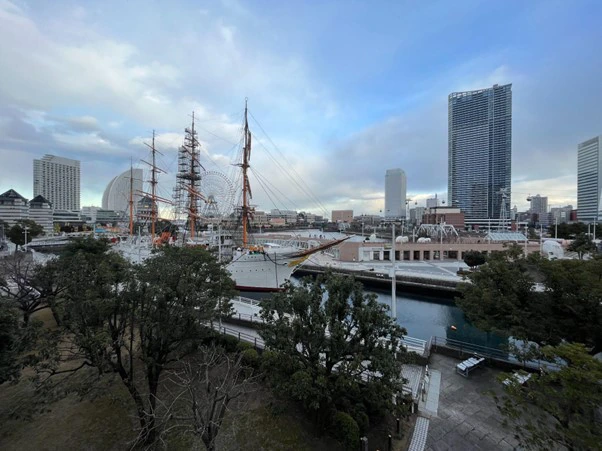
Exhibitions and museums have always fascinated me because they show, in miniature, how their curators saw the world. In this vein, I studied the history of Yokohama’s maritime museums, urban expositions in Nagasaki, and Japan’s use of expositions for cultural diplomacy in France. I show how each exhibition stages evolving narratives of Japanese culture, tradition, and history and, in doing so, reveals malaises and repressed tensions within contemporary society.
- A Lesson in Port CitizenshipHistória da Historiografia · 2023
- Global History in Two ChronotopesRethinking History · 2023
- The Politics of Curating JaponismeJournal of Japonisme · 2023
Who speaks for a community?
Another topic of interest for me was immigrant communities. Japan does not have a history of spatial ethnic segregation, yet why did such “enclaves” start to appear on the map in the last few decades? I argue that the rhetoric, not the reality, of globalization is what discursively constructs enclaves like the Japanese “Chinatown,” as minority clusters become objects of both prestige and fear, as well as evidence of an internationalization expected to have already occurred.
- Multiculturalism between Ideology and PracticeContemporary Japan · 2025
- The Limits of Humanismpositions: asia critique · 2025
Politics in popular fiction
Lastly, I wrote several pieces on the narratology and mediality of Japanese pop fiction, a genre that has long interested me. Specifically, I was drawn to the isekai (“other world”) genre and the web novel ecosystem that gave birth to it. I examine how new technologies synergize with both new modes of reading and ideologies of Japanese (inter-)nationalism.
- Fantasies of Europe, Fantasies of JapanEast Asian Journal of Popular Culture · 2023
- Japanese Web NovelsMechademia: Second Arc · 2025